
Dialectical behavior therapy · Hopkins, Minnesota
Dialectical Behavioral Therapy (DBT) in Minneapolis, Minnesota
DBT skills in Minneapolis, taught inside outpatient addiction and mental health treatment, for the moments when the feeling is too big and the urge is too fast.
Northwoods Haven Recovery teaches dialectical behavior therapy skills in group therapy and individual counseling at both levels of outpatient care, for adults across Minneapolis and the Twin Cities. DBT is for the person who does not lack insight about their using but keeps getting overrun by emotion before insight has a chance to help.
In-network with Minnesota Medicaid, Blue Cross Blue Shield, HealthPartners, UnitedHealthcare, and Medica
Dialectical behavior therapy
Accept where you are. Change what you do. Both at once.
How we use DBT
DBT skills, inside addiction treatment.
We do not run a comprehensive DBT program with phone coaching. We teach DBT skills, DBT-informed, inside addiction treatment, which for most people who come to us is the dose that fits.
4
DBT skills modules, taught in group and individual counseling
2 to 4
Months in IOP, then the Relapse Prevention Program step-down
18+
Adults, including young adults
0
Nights away from home. Every level of care here is outpatient
What DBT is
Skills for emotions that arrive faster than you can think
Dialectical behavior therapy is a skills-based form of cognitive behavioral therapy developed by psychologist Marsha Linehan in the late 1980s for people whose emotions ran so intense and so fast that standard therapy kept failing them. The word dialectical points at its central idea: two things that seem opposed can both be true. You can accept yourself exactly as you are and work hard to change your behavior. You can be doing your best and need to do better. Holding both at once, rather than swinging between self-blame and giving up, is the skill underneath all the others.
DBT organizes those skills into four modules. Mindfulness teaches you to notice what is happening inside you without acting on it immediately. Distress tolerance gives you ways to survive a crisis without making it worse, which for our clients usually means without using. Emotion regulation helps you understand what you are feeling, why, and how to turn the volume down over time. Interpersonal effectiveness covers asking for what you need, saying no, and keeping relationships intact under stress. Each module has named, concrete techniques you practice until they are available under pressure.
In addiction treatment, DBT skills fill a gap that thinking-based approaches leave open. Many people can explain, calmly and accurately, why they use. The problem is the moment itself: a fight, a memory, a wave of shame, and the drink or the pill is in hand before any of that understanding arrives. At Northwoods Haven Recovery, DBT skills are taught inside the same groups and individual sessions that treat the substance use and the depression, anxiety, trauma, or bipolar disorder underneath it.

How it fits here
DBT skills run inside group therapy and individual counseling at both levels of care, alongside CBT, acceptance and commitment therapy, and motivational interviewing. This is DBT-informed addiction treatment, not a standalone comprehensive DBT program. You do not choose one therapy; your counselor teaches you all of them.
Our space
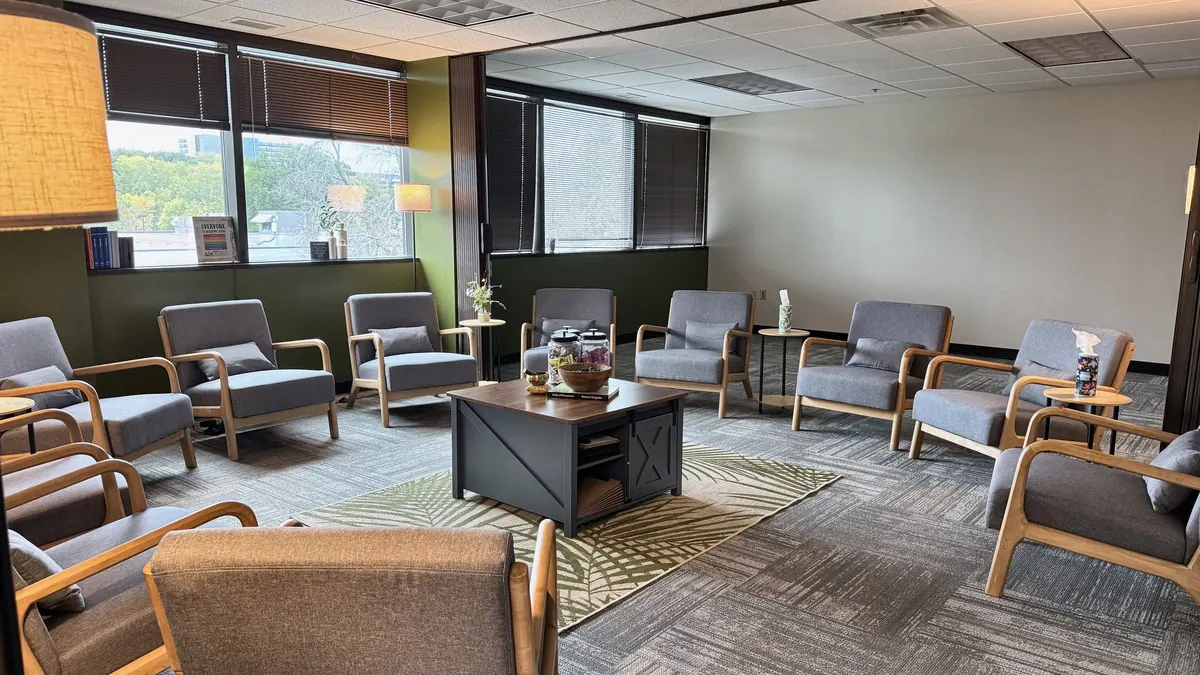
Inside our outpatient treatment center in Hopkins, Minnesota
A safe haven should feel like one. Our suite on Green Oak Drive looks out over water and trees, and the rooms where groups meet were built to feel calm, comfortable, and homey. Not clinical, not institutional. You are more than your diagnosis here, and the space is meant to say so before anyone does.
The lounge
Where people land and catch their breath before group.
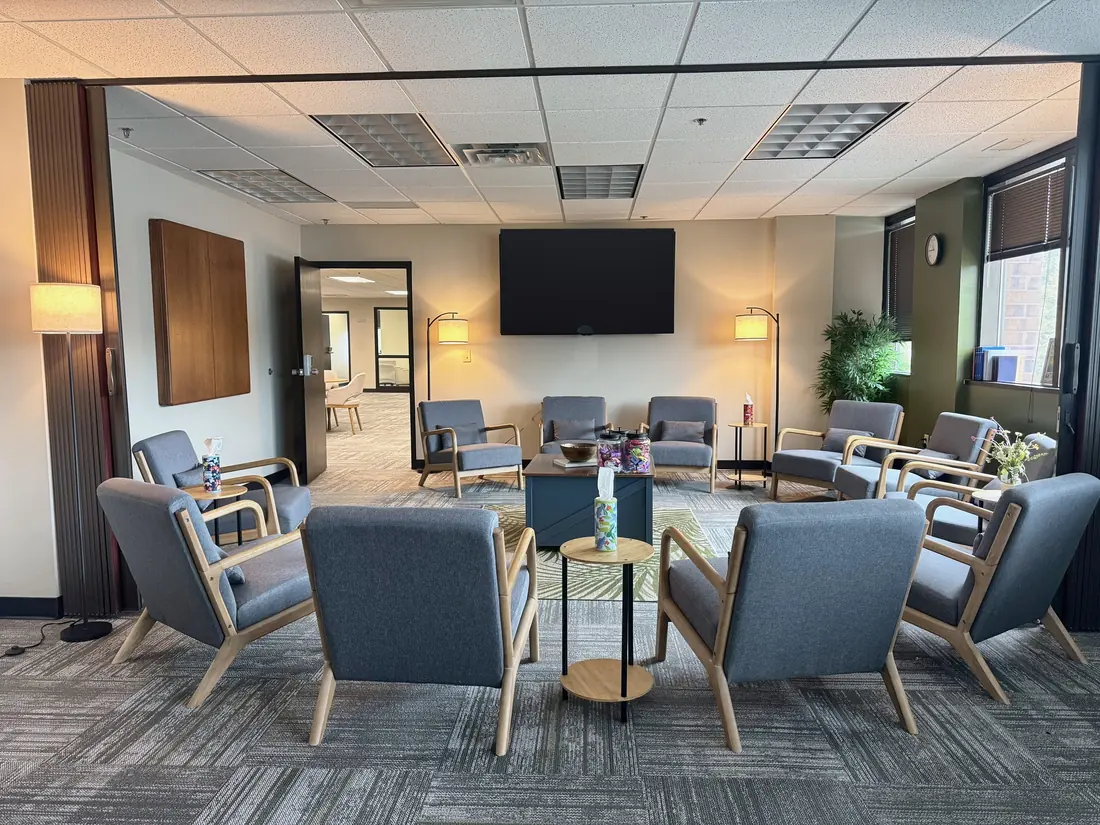
The group room
Three hours a day, in a circle, with people who understand.

The view
Water and treeline out every window: the northwoods, in the metro.
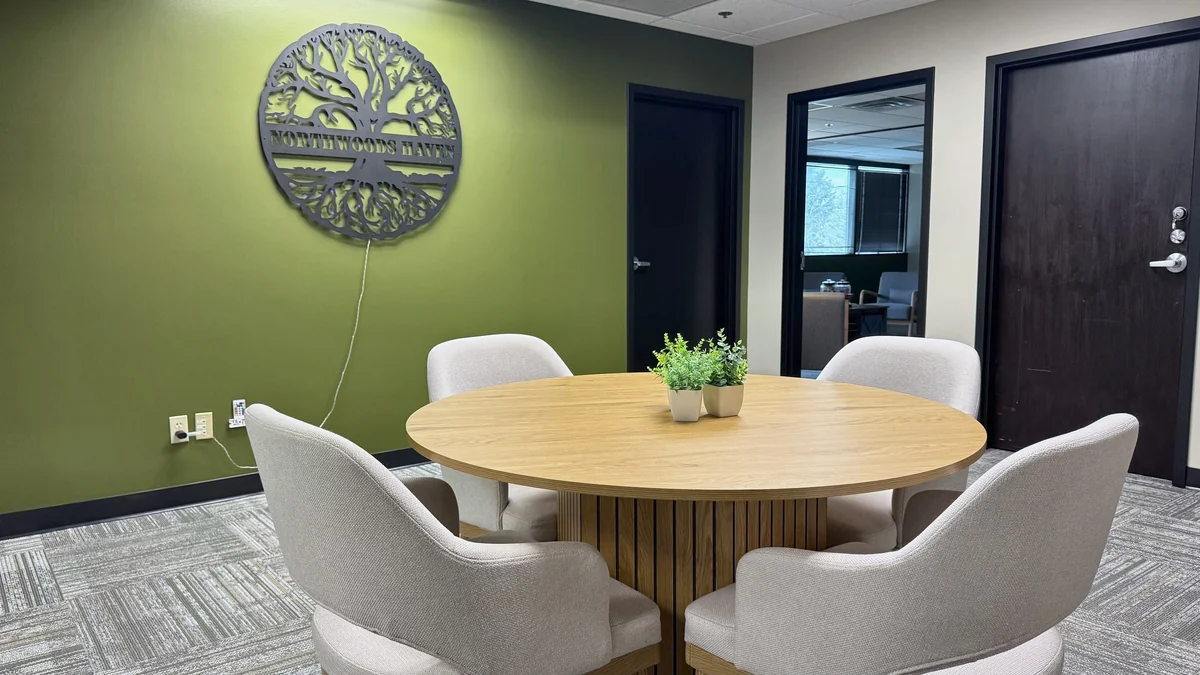
Another Group Room
Three hours a day, in a circle, with people who understand.
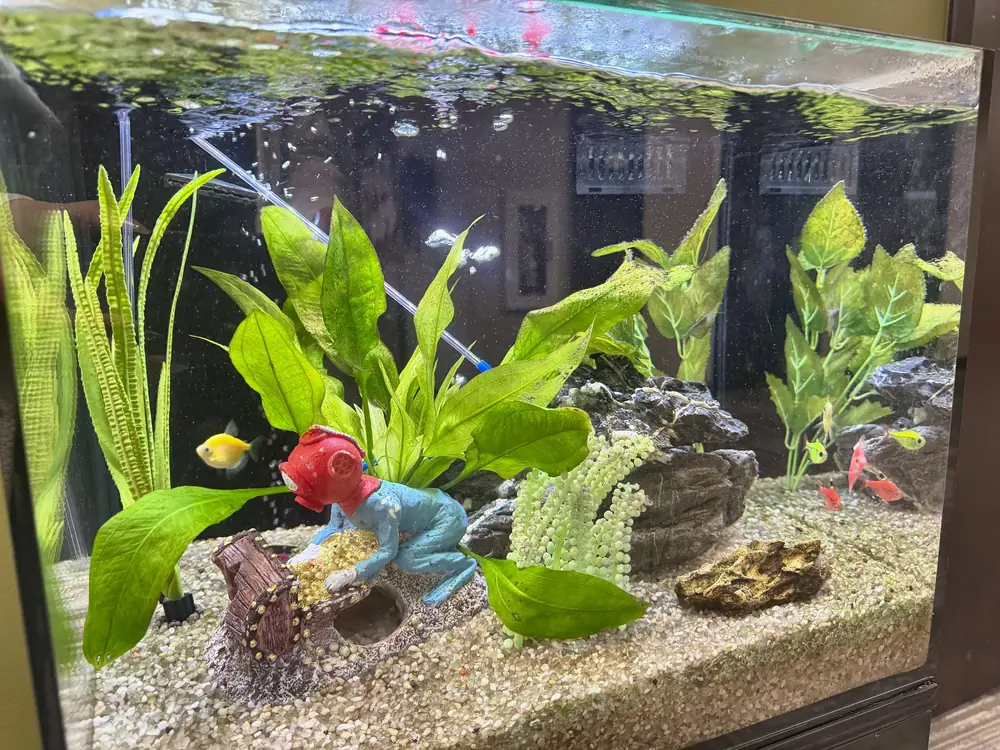
Quiet corners
Somewhere to sit with a thing before you say it out loud.
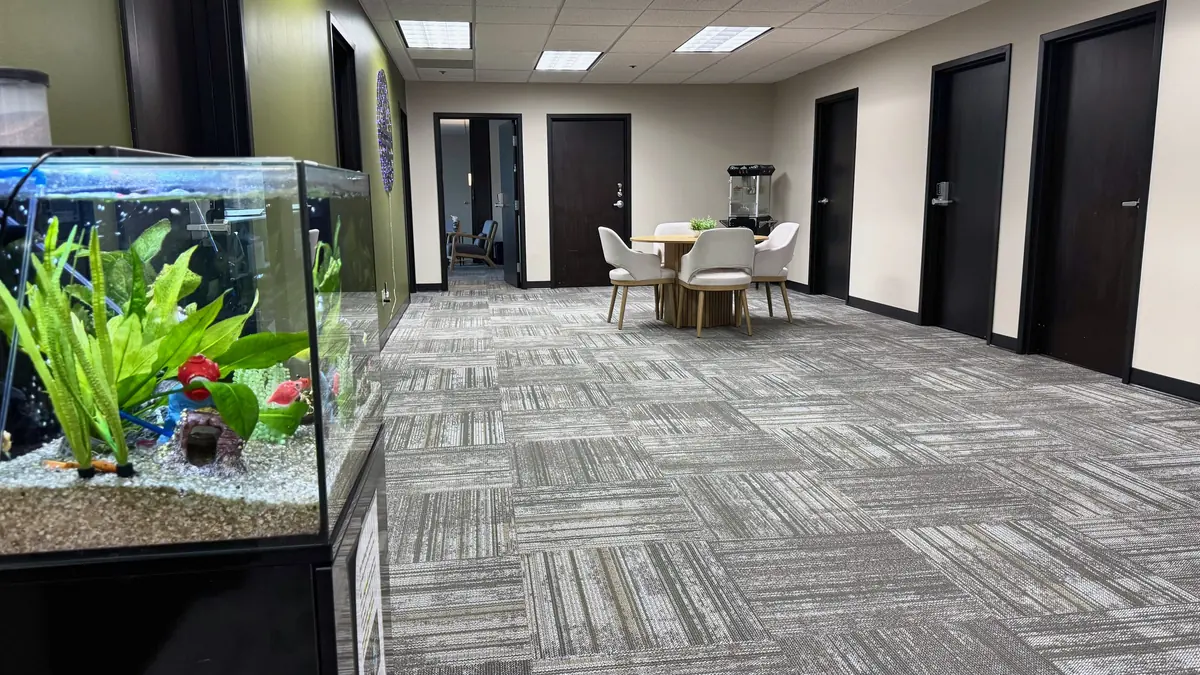
Room to breathe
Daylight and treeline out every window. No clinical fluorescence.
What a session looks like
Core DBT skills you will practice here
Every DBT skill has a name and a set of steps, because a skill you can name is one you can reach for at eleven at night.
Mindset
Wise mind
Finding the place between the emotional mind that says use now and the reasonable mind that lectures you about it. Wise mind knows the urge is real and knows it will pass, and acts from there.
Skill
TIPP and urge surfing
Distress tolerance for the peak of a craving: cold water on the face, intense exercise, paced breathing, and riding the urge like a wave that crests and falls instead of fighting it or feeding it.
Practice
Opposite action
When an emotion pushes you toward isolation, avoidance, or a substance, doing the opposite on purpose: calling someone, showing up to group, staying in the room. The feeling follows the behavior more than we expect.
Homework
Diary cards
A daily one-page log of urges, emotions, and which skills you used. Reviewed with your counselor each week, it turns a blur of bad days into a pattern you can actually work with.
What it helps with
Who DBT skills help most, and what the research says
The research base for DBT is strongest for people with intense, unstable emotions and the behaviors that go with them, including borderline personality disorder, where it remains the best-established treatment. An adaptation of DBT for people with both emotional dysregulation and substance use disorders has shown that the skills reduce use and keep people in treatment longer, which matters because dropout is one of the main ways addiction treatment fails. When substance use is tied to emotional crisis, teaching people to survive the crisis without using works.
That is why DBT skills earn their place in addiction treatment even for people who would never meet criteria for a personality disorder. Trauma, bipolar disorder, ADHD, severe anxiety, and long-term substance use all leave the emotional brakes worn down. Alcohol, opioids, and benzodiazepines are often doing the job those brakes used to do. Distress tolerance and emotion regulation skills give people a way to stop using without leaving them defenseless against the feelings that follow.
DBT skills have limits. They are not designed to dig into where the emotions come from; trauma-focused work and CBT do more of that. They depend on practice between sessions, and someone whose use is mostly habit and social pattern, with steady mood in between, may need this module less than the others. And a comprehensive DBT program, with individual DBT therapy, a skills group, and phone coaching, is more than we offer. If your assessment suggests you need that, we will tell you and help you find it.
Combined with
DBT skills and CBT are taught together here. DBT gets you through the moment the emotion peaks. CBT works on the thinking that set the moment up. Once the skills are steady, acceptance and commitment therapy helps you decide what the life after using is for.
Who it is for
DBT skills are probably a good fit for you if you
- Know exactly why you use and still cannot stop yourself once a strong emotion hits
- Go from fine to overwhelmed in minutes, and the substance is the fastest thing that brings you back down
- Are living with trauma, bipolar disorder, anxiety, or ADHD alongside the substance use and feel your emotions run hotter than other people's
- Have relationships that keep blowing up around your using, and want skills for conflict that do not involve leaving or drinking
- Have been told you are too much, too sensitive, or too intense, and want a treatment that takes that seriously instead of judging it
Not sure yet
A comprehensive assessment answers it.
A chemical use assessment determines your diagnosis, how severe the substance use is, and which level of care fits. From there, your counselor decides how much of your plan leans on DBT skills, not you picking a module. If the assessment suggests you need a comprehensive DBT program, we will help you find one. If you already have a recent assessment, send it over and we will review it instead.
For families
About half our calls are from someone else.
You can ask a question without committing anyone to anything, and family involvement is part of the work when the client wants it.
How we use it
Where DBT skills show up at each step of treatment
The therapy does not change the level of care or the counselors you work with. It changes what you have in hand the next time the emotion spikes.
Step one
Chemical use assessment
An hour with a licensed alcohol and drug counselor. The assessment establishes the diagnosis and the level of care, and it is where the pattern of emotion driving the use first comes into focus.
Where everyone starts
Most people start here
Intensive Outpatient Program (IOP)
Three-hour groups where the four modules are taught and rehearsed, and individual counseling where diary cards and the week’s hardest moments get worked through. About two to four months.
Explore IOP →
Then
Relapse Prevention Program
Ten to twelve weeks with the same counselors. The DBT skills that held become part of your written relapse prevention plan: which ones, for which emotions, in which situations.
Explore relapse prevention →
Therapies
Evidence-based addiction therapies, taught as options, not prescriptions.
We’ll walk you through every approach we use and why, then build your plan around the ones that fit your beliefs and your life. No single pathway, no ideology, no judgment.
Cognitive behavioral therapy
Find the thought patterns that drive use, and learn to interrupt them.
Dialectical behavior therapy
Skills for distress tolerance, emotion regulation, and hard relationships.
Acceptance & commitment therapy
Move toward what you actually value, even when it’s uncomfortable.
Motivational interviewing
Your reasons for changing, in your words. Nobody lectures you here.
Individual counseling
Your own licensed counselor, where the plan gets built and adjusted.
Group therapy
Three hours a day with people who know the terrain you’re crossing.
Addiction counseling
One-on-one counseling with your own chemical dependency counselor.
Trauma-informed care
Care that accounts for what happened to you, not what’s wrong with you.
Relapse prevention and aftercare planning run through every level of care rather than sitting off to the side, and whole-person care means mental health psychoeducation happens alongside all of it.
Therapies
Evidence-based therapies we use, taught as options
Seven approaches, one plan built with you. Your counselor teaches you what each one does and you decide what belongs in your recovery lifestyle.
Catch the thought that comes before the drink or the drug, test it, and practice a different move before Friday.
Skills for intense emotion, urges, and relationships: mindfulness, distress tolerance, emotion regulation, interpersonal effectiveness.
Make room for the craving or the feeling without acting on it, and build a life around what you value.
Find your own reasons to change, at your own pace. Includes motivational enhancement therapy, the structured short form.
The same people each session, so accountability is real. Where most of the traction in outpatient treatment comes from.
Every group and session run on predictability, choice, and safety, because most people carry something older than the substance.
Mental health, relationships, work, and purpose treated as one picture, with a recovery lifestyle you define.
You do not choose a therapy from a menu. Your counselor teaches you all of them as options and the plan uses what works for you.
Assessments and services
Assessments and services that get you into the right care
Everything begins with an assessment. These are the services around our two levels of outpatient care.
The hour that turns a worry into a diagnosis and a level of care. Where everyone starts.
A clinical evaluation for Minnesota DWI court, probation, and licensing requirements, with written documentation.
Individual counseling with your own licensed alcohol and drug counselor, inside every level of care here.
Paying for treatment
Insurance-covered addiction treatment that's accessible to anyone who wants it.
Medicaid was the first network we joined, on purpose. We’re also in-network with major commercial plans. We’ll verify your benefits and tell you plainly what your plan covers before you commit to anything.
Minnesota Medicaid
Blue Cross Blue Shield
HealthPartners
UnitedHealthcare
Medica
Hennepin Health
Private pay accepted
Not listed? Call and we'll check.
Common questions
Questions people ask about dialectical behavior therapy
If yours is not here, ask us directly. We would rather tell you honestly that we are not the right fit than have you find out later.
LegitScript Certified
Verified addiction treatment provider
Is DBT the same as CBT?
No. DBT grew out of cognitive behavioral therapy, so both are structured and skills-based, but they aim at different moments. CBT works on changing the thoughts behind the urge. DBT works on surviving the emotion when there is no time to think, and on accepting yourself while you change. At Northwoods Haven Recovery you learn both, because most people need both.
Is this a full DBT program?
No, and we want to be plain about that. A comprehensive DBT program includes individual DBT therapy, a weekly skills group, phone coaching between sessions, and a therapist consultation team. We teach DBT skills inside outpatient addiction treatment, DBT-informed. If your assessment shows you need the comprehensive version, we will help you find it.
Do I need a borderline personality disorder diagnosis for DBT to help?
No. DBT was developed for that diagnosis, but the skills help anyone whose emotions run intense and fast, which describes many people in early recovery. Trauma, bipolar disorder, ADHD, anxiety, and long-term substance use all wear down emotional regulation. The skills are about the emotion, not the label.
What are the four DBT modules?
Mindfulness, distress tolerance, emotion regulation, and interpersonal effectiveness. Mindfulness is noticing without reacting. Distress tolerance is getting through a crisis without making it worse. Emotion regulation is understanding and lowering the intensity of feelings over time. Interpersonal effectiveness is asking, refusing, and keeping relationships intact under stress.
Do I have to talk in group?
You are never forced to share your story, and nobody is put on the spot on day one. DBT skills groups are closer to a class than to open sharing: a skill is taught, practiced, and then people talk about where it did or did not work. Most people find that structure makes speaking up easier.
How long does it take to learn DBT skills?
The four modules are covered across about two to four months in the Intensive Outpatient Program and reinforced for ten to twelve weeks in the Relapse Prevention Program. Learning the skills is faster than making them automatic. Diary cards and practice between sessions turn a skill you know into one you use.
Can I do DBT if I take medication?
Yes. Mood stabilizers, antidepressants, ADHD medication, and medications for cravings that a medical provider prescribes are part of your picture, and DBT skills work alongside them. We do not prescribe or manage medication here. Tell us during the assessment so your plan accounts for it.
Does insurance cover DBT?
DBT skills are part of the outpatient treatment itself, not a separately billed service, so they are covered when the program is. We are in-network with Minnesota Medicaid, Blue Cross Blue Shield, HealthPartners, UnitedHealthcare, and Medica. Give us your plan information on the first call and we will verify your benefits.
Your team
Meet the counselors who answer the phone and guide your treatment.



Getting started
How to get started: four steps, no waiting eleven days.
Reaching out doesn’t commit you to anything. It means you asked a question, and we answered it.
01
Call
We listen to what’s going on and where you are in the process. No script, no pressure.
02
Chemical use assessment
A comprehensive assessment to determine diagnosis and the level of care that fits.
03
Referral to the right care
Ideally with us. If another program fits you better, we’ll connect you to it.
04
Intake
Programming starts immediately after intake. Already have an assessment? Send it over and we’ll review it.
Take the first step
When you're ready, we're here.
Reaching out doesn’t mean you’ve committed to anything. It means you’re asking a question, and we’ll answer it honestly, even if the answer points somewhere else.
100% confidential
Insurance verified fast
No commitment to ask
Outpatient only
Referring professionals
Send a comprehensive assessment, plus treatment plan reviews, discharge summary, med list, and insurance information if applicable. A list, not a portal.
Visit us in Hopkins
Northwoods Haven Recovery
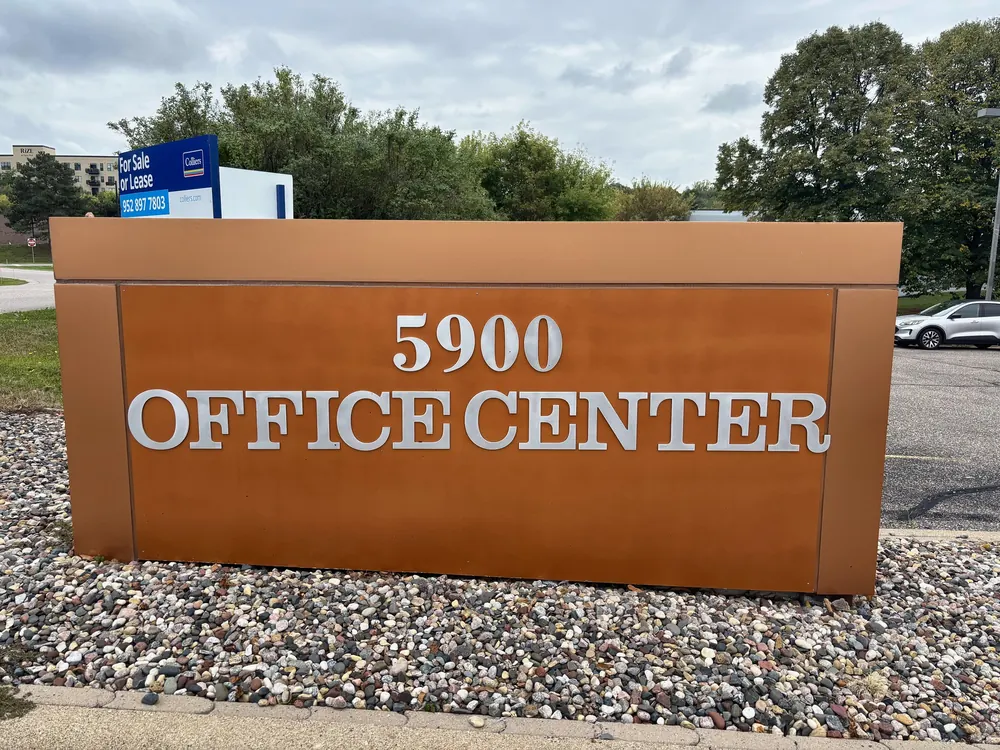
5900 Green Oak Drive, Ste 306
Hopkins, MN 55343