
Trauma-informed care · Hopkins, Minnesota
Trauma-Informed Addiction Treatment in Minneapolis, Minnesota
Trauma-informed care in Minneapolis: outpatient addiction and mental health treatment run so that nothing about the treatment itself repeats the harm.
Northwoods Haven Recovery runs every group and every individual session on trauma-informed principles, for adults across Minneapolis and the Twin Cities, from our center in Hopkins. Trauma-informed care is not a separate therapy you sign up for. It is the way the whole program is built: predictable, safe, collaborative, and free of the confrontation that older models of addiction treatment relied on.
In-network with Minnesota Medicaid, Blue Cross Blue Shield, HealthPartners, UnitedHealthcare, and Medica

Trauma-informed care
Safety, choice, and predictability, in every room, every time.
Why it matters
Treatment that assumes trauma keeps people.
Most people who use substances heavily have a history that includes trauma. Treatment that ignores that tends to lose people. Treatment that assumes it tends to keep them.
Every
Group and session runs on trauma-informed principles
2 to 4
Months in IOP, then the Relapse Prevention Program step-down
18+
Adults, including young adults
0
Nights away from home. Every level of care here is outpatient
What trauma-informed care is
A method for running treatment, not a diagnosis
Trauma-informed care is an approach to delivering services that starts from a simple assumption: a large share of the people walking through the door have lived through something that overwhelmed them, whether or not they call it trauma and whether or not they ever mention it. Rather than asking each person to prove a history before adjusting, a trauma-informed program adjusts for everyone. The principles are widely agreed on: physical and emotional safety, transparency about what will happen, peer support, collaboration rather than hierarchy, real choice and a voice in your own plan, and attention to the cultural and personal contexts people carry with them.
In practice that changes ordinary things. Sessions start and end when they are supposed to. You know the shape of a group before you walk in. Nobody is confronted, put on the spot, or told they are in denial. Nobody is required to disclose anything, and the facilitator watches for signs that someone is being pushed past what they can tolerate and slows the room down. Feedback is honest but never contemptuous. If something in the environment makes it harder for you to stay present, you can say so and it will be taken seriously.
At Northwoods Haven Recovery, this is the operating system for both levels of care. Group facilitators and individual counselors, all licensed alcohol and drug counselors, work from the same principles, so the experience is consistent from your first group to your last relapse prevention session. Trauma-informed care is also what makes it possible to treat the trauma and PTSD that so often sit underneath substance use, because people cannot work on painful material in a room that does not feel safe.
How it fits here
Trauma-informed care shapes how every therapy here is delivered, including CBT, DBT skills, acceptance and commitment therapy, and motivational interviewing, in group and individual counseling at both levels of care. You do not choose it. It is how the program runs for everyone.
Our space
Inside our outpatient treatment center in Hopkins, Minnesota
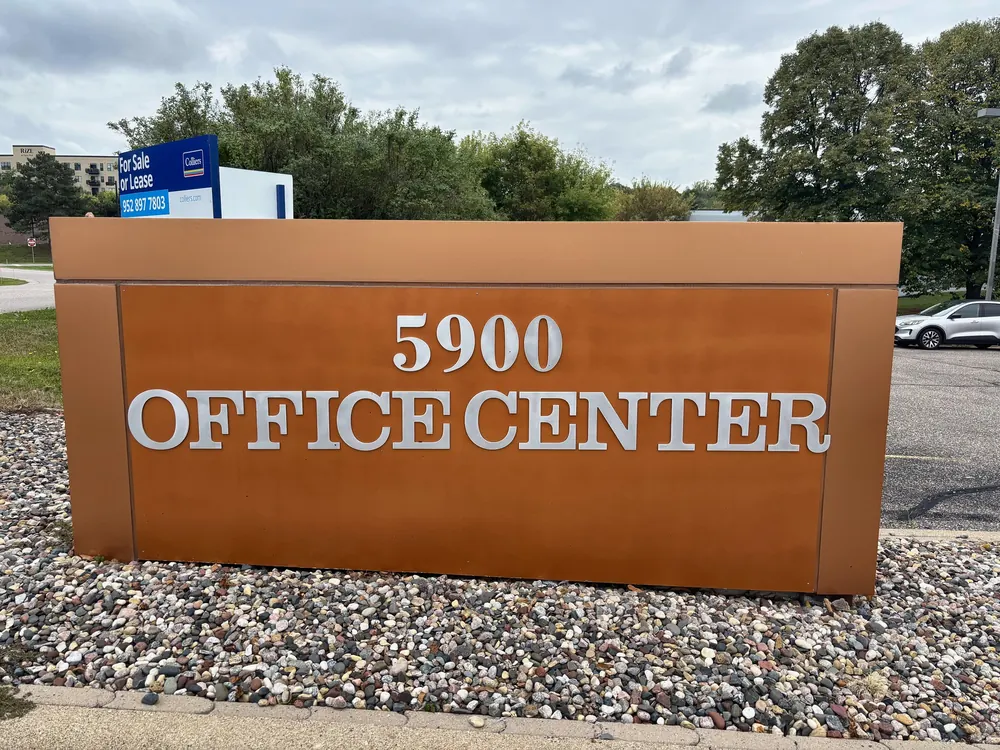
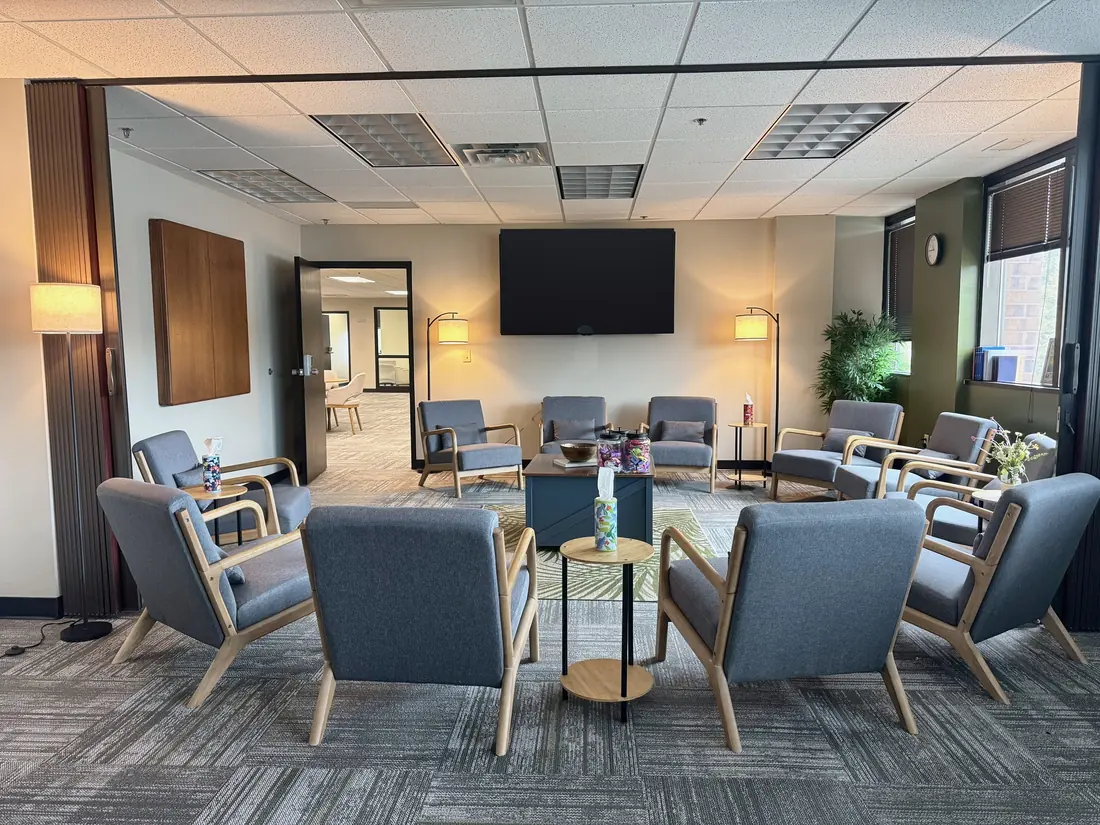
A safe haven should feel like one. Our suite on Green Oak Drive looks out over water and trees, and the rooms where groups meet were built to feel calm, comfortable, and homey. Not clinical, not institutional. You are more than your diagnosis here, and the space is meant to say so before anyone does.

The lounge
Where people land and catch their breath before group.
The group room
Three hours a day, in a circle, with people who understand.

The view
Water and treeline out every window: the northwoods, in the metro.

Another Group Room
Three hours a day, in a circle, with people who understand.

Quiet corners
Somewhere to sit with a thing before you say it out loud.

Room to breathe
Daylight and treeline out every window. No clinical fluorescence.
What a session looks like
What trauma-informed treatment looks like in practice
The principles are abstract until you sit in a room run on them. These are the things people notice first.
Practice
You know what is coming
Group has a consistent structure and a facilitator who explains each part before it happens. Predictability lowers the background alarm many people carry, and it is the difference between enduring a session and using one.
Mindset
You decide what you share
Check-in can be one sentence. You can pass on a topic. You are never asked to recount what happened to you, in group or individually, and nothing you share is used against you later.
Skill
Grounding and pacing
Counselors teach simple skills for staying present when a discussion stirs something up: attention to breath, to the room, to the feet on the floor. If the pace gets too fast, the facilitator slows it for everyone, not just you.
Individual
Choice in your plan
Your goals, how you work your recovery, and which co-occurring issues to address first are decided with you, not for you. Individual sessions are where those choices are made and revisited.

What it helps with
What trauma-informed care helps with, and what the research says
Trauma-informed care matters most for the people most likely to leave treatment early: those with a history of abuse, neglect, violence, combat, or loss who have learned that rooms full of authority figures are not safe, and who read confrontation as a threat. That describes a large share of people with substance use disorders, and more of those with a co-occurring condition such as PTSD, depression, or anxiety. It also matters for people harmed by earlier treatment that mistook humiliation for accountability. It is not substance-specific: alcohol, opioids, stimulants, and cannabis all appear in trauma histories, often as ways of managing intrusive memories, hypervigilance, or numbness.
The evidence is consistent where it counts. Programs that adopt trauma-informed principles keep more people in treatment, see fewer crises and conflicts, and report better engagement, and people with co-occurring trauma and substance use do better when both are addressed together rather than being told to get sober first and deal with the rest later. Trauma-informed care is not itself a trauma treatment; it is the condition that makes trauma treatment possible. Here, the trauma-specific work happens inside CBT, DBT skills such as distress tolerance and emotion regulation, acceptance and commitment therapy, and individual counseling.
Its limits are worth stating plainly. Trauma-informed care here is delivered through CBT, DBT skills, acceptance and commitment therapy, and individual counseling. Structured trauma-processing protocols such as EMDR or prolonged exposure, which some people with severe PTSD eventually need, are a specialized service, and we do not provide medical care or prescribe medication. If your assessment or your progress suggests that kind of specialized therapy, we will say so and help you find it, alongside treatment here or after it. If your needs are primarily trauma without a substance use diagnosis, a program built for that will serve you better, and we will help you get there.
Combined with
Trauma-informed care sets the conditions. DBT skills give you tools for the moments inside them: distress tolerance for the surge, emotion regulation for the aftermath, mindfulness for staying in the room. The two are taught together at both levels of care.
Who it is for
Trauma-informed treatment is probably right for you if you
- Have a history of trauma, whether or not you have ever been diagnosed with PTSD, and are wary of programs that push
- Left an earlier treatment program because it felt confrontational, shaming, or unsafe
- Use alcohol or drugs to manage intrusive memories, nightmares, hypervigilance, or feeling numb
- Are living with depression, anxiety, or another mental health condition alongside your substance use
- Want a say in your own plan and a counselor who treats you as a partner rather than a case
Not sure yet
A comprehensive assessment answers it.
You do not have to disclose a trauma history to receive trauma-informed care; everyone here does. A chemical use assessment with a licensed alcohol and drug counselor determines your diagnosis, whether a co-occurring condition such as PTSD is part of the picture, and the level of care that fits, here or somewhere better suited to you. You control the pace and what you share. If you already have a recent assessment, send it over and we will review it instead of repeating it.
For families
About half our calls are from someone else.
You can ask a question without committing anyone to anything, and family involvement is part of the work when the client wants it.
How it shows up
Where trauma-informed care appears at each step of care
The principles do not change between steps. What changes is how much of the work is about staying safe in the room and how much is about building a life outside it.
Step one
Chemical use assessment
A private conversation with a licensed counselor, at your pace. Trauma history is asked about with care and never required. If a co-occurring condition such as PTSD is present, it shapes the plan from the start.
Where everyone starts
Most people start here
Intensive Outpatient Program (IOP)
Predictable three-hour groups, no confrontation, no forced disclosure, and individual counseling where the trauma-specific work happens as you are ready. Grounding and DBT skills taught early.
Explore IOP →
Then
Relapse Prevention Program
Ten to twelve weeks with the same counselors. Your written relapse prevention plan names the trauma-linked triggers, anniversaries, and situations that matter, and what you will do when they arrive.
Explore relapse prevention →
Therapies
Evidence-based addiction therapies, taught as options, not prescriptions.
We’ll walk you through every approach we use and why, then build your plan around the ones that fit your beliefs and your life. No single pathway, no ideology, no judgment.
Cognitive behavioral therapy
Find the thought patterns that drive use, and learn to interrupt them.
Dialectical behavior therapy
Skills for distress tolerance, emotion regulation, and hard relationships.
Acceptance & commitment therapy
Move toward what you actually value, even when it’s uncomfortable.
Motivational interviewing
Your reasons for changing, in your words. Nobody lectures you here.
Individual counseling
Your own licensed counselor, where the plan gets built and adjusted.
Group therapy
Three hours a day with people who know the terrain you’re crossing.
Addiction counseling
One-on-one counseling with your own chemical dependency counselor.
Trauma-informed care
Care that accounts for what happened to you, not what’s wrong with you.
Relapse prevention and aftercare planning run through every level of care rather than sitting off to the side, and whole-person care means mental health psychoeducation happens alongside all of it.
Therapies
Evidence-based therapies we use, taught as options
Seven approaches, one plan built with you. Your counselor teaches you what each one does and you decide what belongs in your recovery lifestyle.
Catch the thought that comes before the drink or the drug, test it, and practice a different move before Friday.
Skills for intense emotion, urges, and relationships: mindfulness, distress tolerance, emotion regulation, interpersonal effectiveness.
Make room for the craving or the feeling without acting on it, and build a life around what you value.
Find your own reasons to change, at your own pace. Includes motivational enhancement therapy, the structured short form.
The same people each session, so accountability is real. Where most of the traction in outpatient treatment comes from.
Every group and session run on predictability, choice, and safety, because most people carry something older than the substance.
Mental health, relationships, work, and purpose treated as one picture, with a recovery lifestyle you define.
You do not choose a therapy from a menu. Your counselor teaches you all of them as options and the plan uses what works for you.
Assessments and services
Assessments and services that get you into the right care
Everything begins with an assessment. These are the services around our two levels of outpatient care.
The hour that turns a worry into a diagnosis and a level of care. Where everyone starts.
A clinical evaluation for Minnesota DWI court, probation, and licensing requirements, with written documentation.
Individual counseling with your own licensed alcohol and drug counselor, inside every level of care here.
Paying for treatment
Insurance-covered addiction treatment that's accessible to anyone who wants it.
Medicaid was the first network we joined, on purpose. We’re also in-network with major commercial plans. We’ll verify your benefits and tell you plainly what your plan covers before you commit to anything.
Minnesota Medicaid
Blue Cross Blue Shield
HealthPartners
UnitedHealthcare
Medica
Hennepin Health
Private pay accepted
Not listed? Call and we'll check.
Common questions
Questions people ask about trauma-informed addiction treatment
If yours is not here, ask us directly. We would rather tell you honestly that we are not the right fit than have you find out later.

LegitScript Certified
Verified addiction treatment provider
Is trauma-informed care the same as trauma therapy?
No. Trauma-informed care is how a program is run: safe, predictable, collaborative, with no confrontation or forced disclosure, for everyone regardless of history. Trauma therapy is specific treatment for a condition such as PTSD. Northwoods Haven Recovery runs everything on trauma-informed principles and treats co-occurring trauma and PTSD alongside substance use through CBT, DBT skills, and individual counseling.
Do I have to talk about what happened to me?
No. You are never required to recount your trauma, in group or in individual counseling. Some people choose to, in their own time and usually in individual sessions. Others work on how trauma affects them now, such as sleep, triggers, and the urge to use, without going into the events themselves. Both are legitimate paths.
Is trauma-informed care the same as EMDR or prolonged exposure therapy?
No. Trauma-informed care is the way the whole program is run. EMDR and prolonged exposure are structured trauma-processing protocols that some people with severe PTSD eventually need. If your assessment or your progress suggests you would benefit from one, we will tell you and help you find a provider, and that therapy can run alongside your outpatient treatment here or follow it.
Will I be confronted about my drinking or drug use?
No. Confrontation is not part of how we work, and the evidence says it drives people out of treatment rather than into recovery. Your counselor will be honest with you about risks and patterns, and group members give real feedback, but within norms that rule out contempt and shaming.
Do I have to have PTSD to be treated here?
No. Trauma-informed care applies to everyone, whether or not trauma is part of your history. If you have PTSD or another co-occurring condition alongside a substance use disorder, we treat both together. If your needs are primarily trauma with no substance use diagnosis, a program built for that will serve you better, and we will help you find one.
Do I have to talk in group?
Not before you are ready. Check-in can be a single sentence, you can pass on a topic, and nobody is put on the spot. Facilitators watch the room and slow it down when someone is being pushed too far. Most people want to speak sooner than they expected once they trust how the group works.
How long does treatment take?
Most people spend about two to four months in the Intensive Outpatient Program, then ten to twelve weeks in the Relapse Prevention Program with the same counselors. Trauma-informed principles apply throughout. Your plan is reviewed as you go, so the timeline reflects your progress.
Does insurance cover trauma-informed addiction treatment?
Yes. Trauma-informed care is how our outpatient programs are delivered, not a separate charge. Northwoods Haven Recovery is in-network with Minnesota Medicaid, Blue Cross Blue Shield, HealthPartners, UnitedHealthcare, and Medica. Give us your plan information on the first call and we will verify your benefits.
Your team
Meet the counselors who answer the phone and guide your treatment.



Getting started
How to get started: four steps, no waiting eleven days.
Reaching out doesn’t commit you to anything. It means you asked a question, and we answered it.
01
Call
We listen to what’s going on and where you are in the process. No script, no pressure.
02
Chemical use assessment
A comprehensive assessment to determine diagnosis and the level of care that fits.
03
Referral to the right care
Ideally with us. If another program fits you better, we’ll connect you to it.
04
Intake
Programming starts immediately after intake. Already have an assessment? Send it over and we’ll review it.
Take the first step
When you're ready, we're here.
Reaching out doesn’t mean you’ve committed to anything. It means you’re asking a question, and we’ll answer it honestly, even if the answer points somewhere else.
100% confidential
Insurance verified fast
No commitment to ask
Outpatient only
Referring professionals
Send a comprehensive assessment, plus treatment plan reviews, discharge summary, med list, and insurance information if applicable. A list, not a portal.
Visit us in Hopkins
Northwoods Haven Recovery
5900 Green Oak Drive, Ste 306
Hopkins, MN 55343