
Intensive outpatient program · Hopkins, Minnesota
Intensive Outpatient (IOP) Programs in Minneapolis, Minnesota
Structured, evidence-based outpatient care for adults who need more than a weekly therapy hour and won't disappear from their job or family to get it.
Northwoods Haven Recovery’s Intensive Outpatient Program (IOP) is our most structured level of outpatient addiction treatment, serving Minneapolis and the greater Twin Cities from our center in Hopkins. Three-hour groups most programming days, one-on-one counseling with your own chemical dependency counselor, treatment for co-occurring mental health conditions, and a plan you helped build. Then you go home.
In-network with Minnesota Medicaid, Blue Cross Blue Shield, HealthPartners, UnitedHealthcare, and Medica
Level of care
More than weekly therapy. Less than a hospital.
How long IOP lasts
About two to four months, then a step-down.
Most people are in IOP for about two to four months, then step down to our Relapse Prevention Program. Programming starts immediately after intake.
2 to 4
Months in IOP, then the Relapse Prevention Program step-down
3 hrs
A programming day, several days a week
18+
Adults, including young adults
Right after intake
Programming starts immediately
What IOP is
What an intensive outpatient program is, and why it holds
An intensive outpatient program, or IOP, is a level of addiction treatment that provides consistent clinical structure while you keep living at home. It sits between standard outpatient care, which might be one session a week, and a partial hospitalization or residential program that asks for most of your day. You go to group, you go to work, and the skills you learn on Tuesday get tested on Wednesday. That is the point of this level of care, and it is why it holds.
Inside the program: group therapy with the same cohort each session, individual counseling with your own chemical dependency counselor, mental health psychoeducation, and treatment for co-occurring conditions such as trauma, depression, anxiety, and bipolar disorder. Relapse prevention and aftercare planning run through all of it rather than waiting until the end, so when you step down, the plan already exists.
How you work your recovery is yours to define. Northwoods Haven Recovery is inclusive of every belief system and every recovery approach. We teach you all of your options, then build the plan with you, not for you.

One thing to be clear about
We are outpatient only. No detox, no inpatient, no residential care. If you are in active withdrawal, that needs medical attention first, and we will help you find it.
Our space
Inside our outpatient treatment center in Hopkins, Minnesota
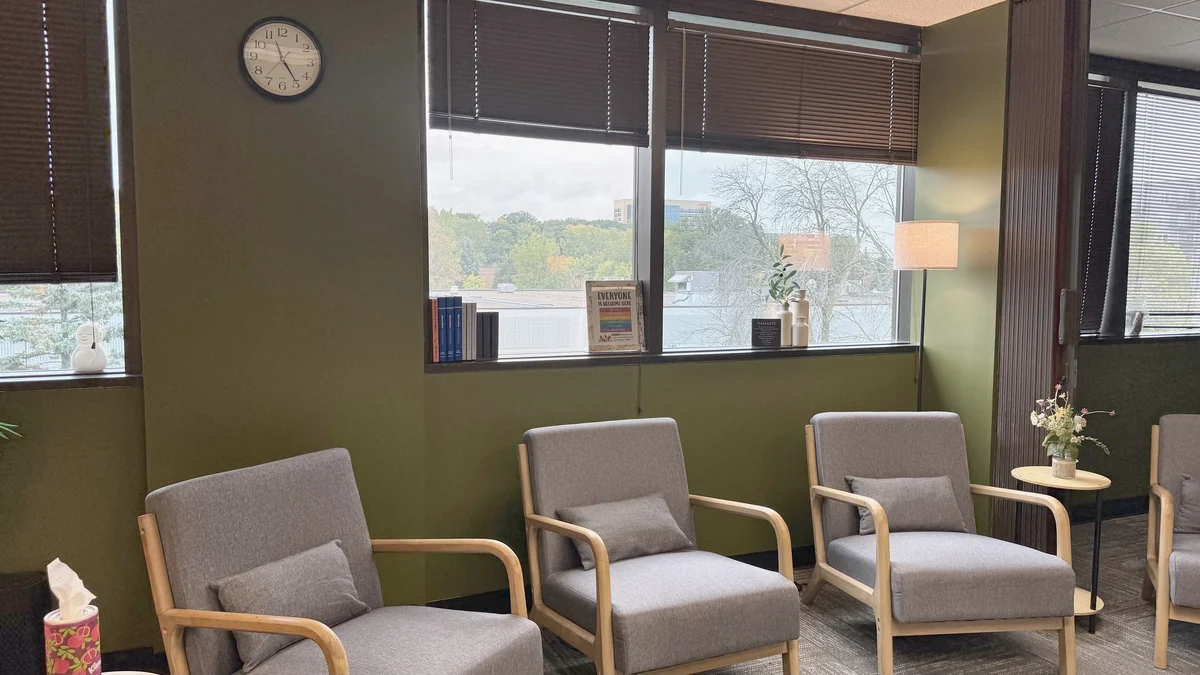
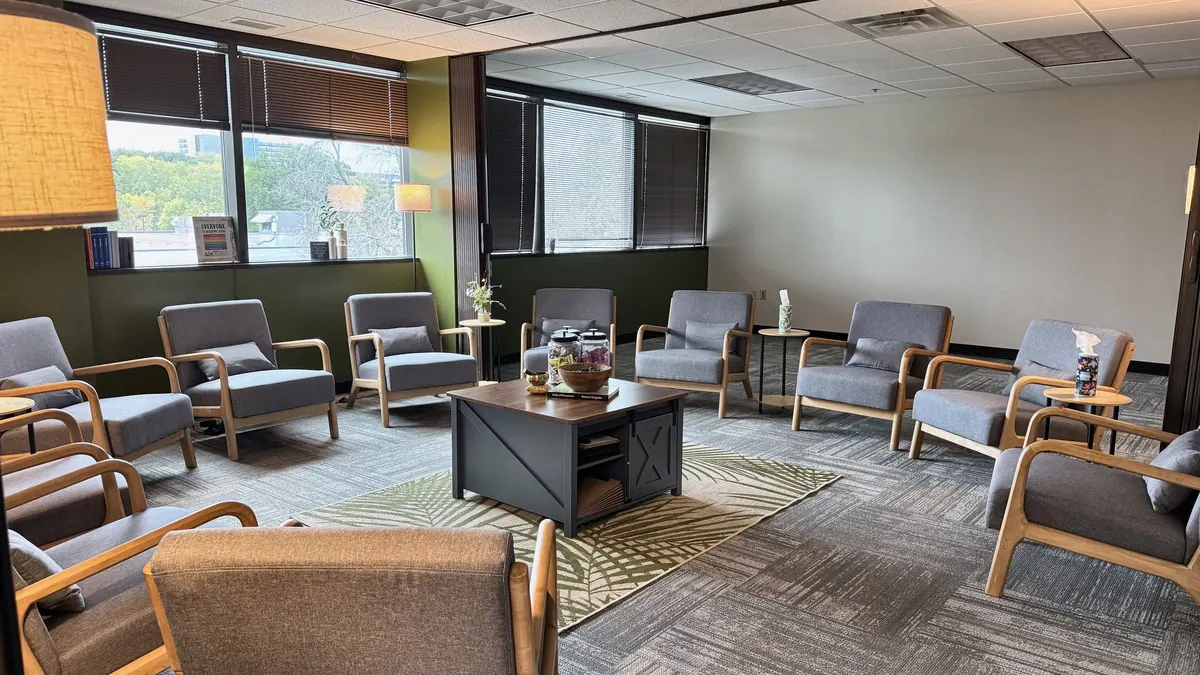
A safe haven should feel like one. Our suite on Green Oak Drive looks out over water and trees, and the rooms where groups meet were built to feel calm, comfortable, and homey. Not clinical, not institutional. You are more than your diagnosis here, and the space is meant to say so before anyone does.
The lounge
Where people land and catch their breath before group.
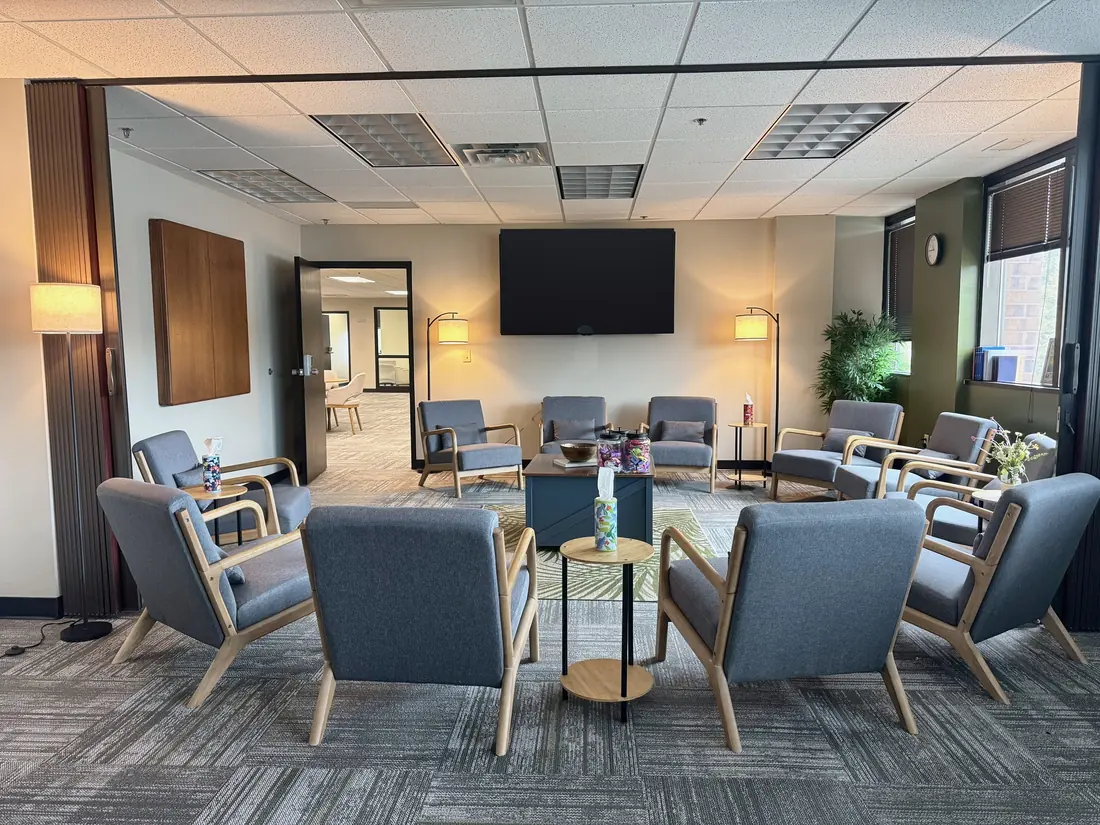
The group room
Three hours a day, in a circle, with people who understand.

The view
Water and treeline out every window: the northwoods, in the metro.
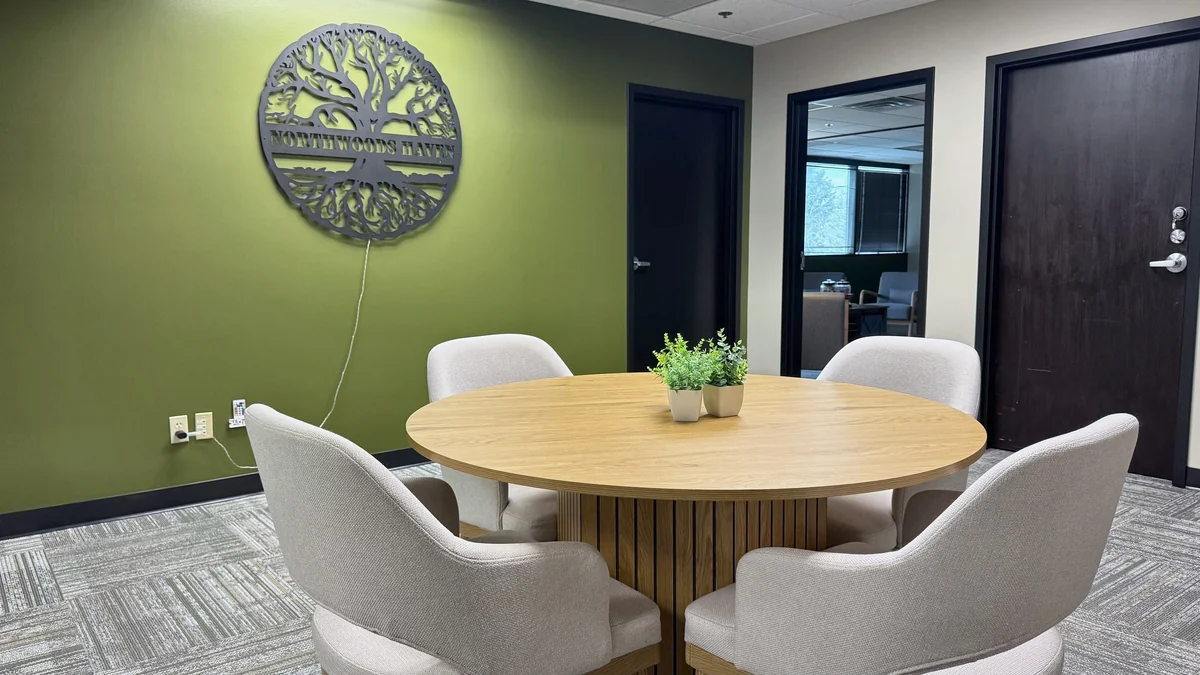
Another Group Room
Three hours a day, in a circle, with people who understand.
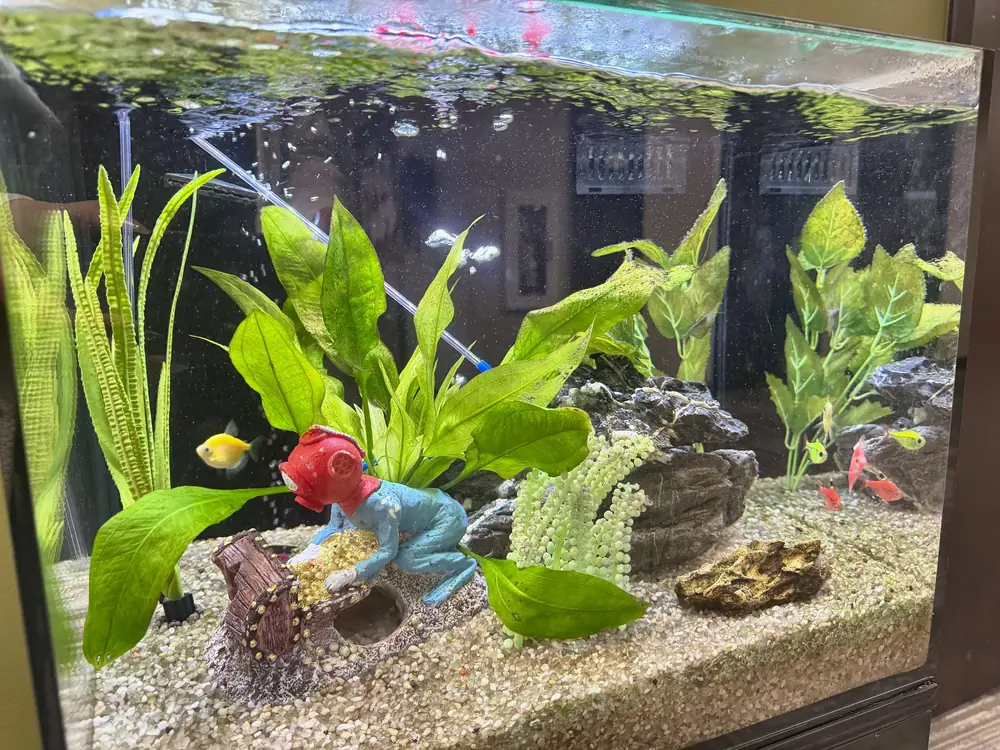
Quiet corners
Somewhere to sit with a thing before you say it out loud.
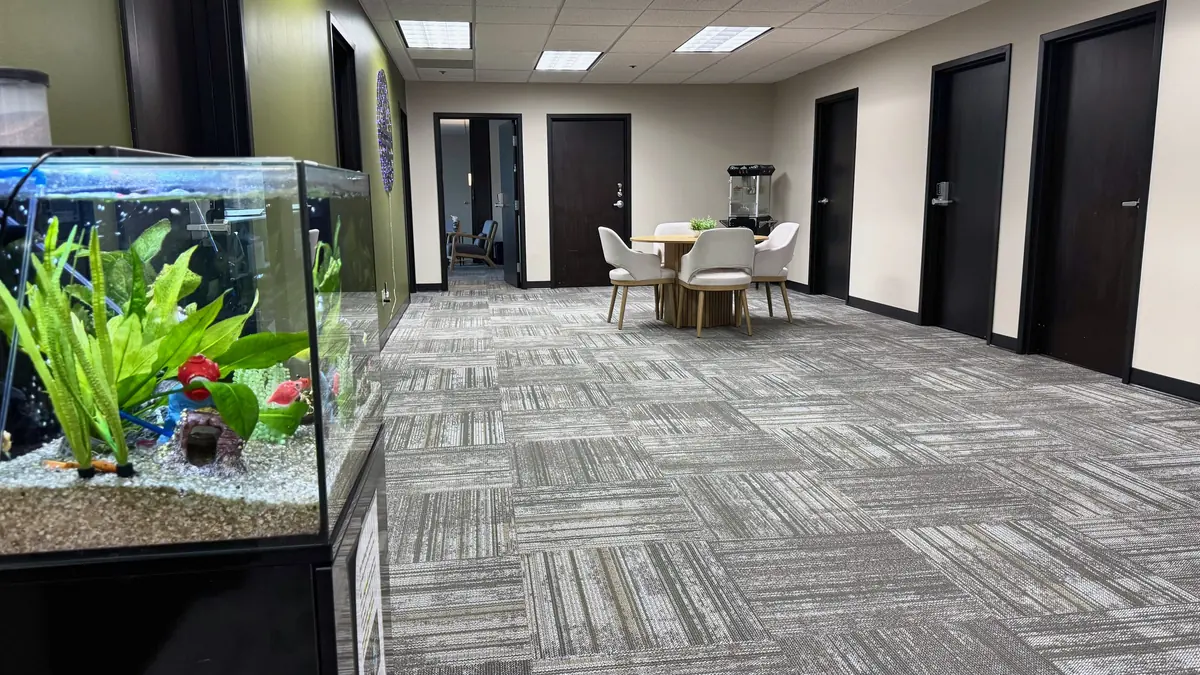
Room to breathe
Daylight and treeline out every window. No clinical fluorescence.
Programming
What a week in IOP actually looks like
Your schedule is individualized and reviewed as you go. This is the shape most weeks take.
Group therapy
3 hours
A three-hour group most programming days, with the same cohort each session, so accountability is real rather than theoretical.
Individual counseling
1 hour
With your own chemical dependency counselor, depending on the day and the week. This is where the plan gets adjusted.
Psychoeducation
Built in
Mental health education and co-occurring treatment alongside clinical programming, not as an add-on.
Off days
Yours
Work, school, family, and whatever you and your counselor planned for the week.
Who it is for
Who intensive outpatient treatment is right for
- You need more structure than a weekly therapy hour, and less than a hospital or residential program
- You are not willing to step away from work, school, or family to get treatment, and you have a stable place to live
- You are working through a substance use disorder and a mental health condition at the same time
- You are stepping down from residential or inpatient care and want structure that holds while you return to daily life
- You have tried to stop on your own and want people around you who understand why that is hard
Not sure yet
A comprehensive assessment answers it.
A chemical use assessment determines your diagnosis and the level of care that fits, here or somewhere better suited to you. If you are in active withdrawal or need residential care, we will say so and help you find it. If you already have an assessment, send it over and we will review it instead of repeating it.
For families
About half our calls are from someone else.
You can ask a question without committing anyone to anything, and family involvement is part of the work when the client wants it.
Levels of care
IOP is the middle of a path, not the whole of it
People arrive here from different places and leave for different ones. Relapse prevention and aftercare planning run through every level rather than being sold separately.
Stepping in
After residential or inpatient
You finished a higher level of care and need structure that holds while you go back to ordinary life. Send your discharge summary and we will build from it.
The most common way people arrive
Where you are
Intensive Outpatient Program
Three-hour groups, individual counseling, and co-occurring care. Two to four months, individualized and reviewed as you go.
Where you are now
Stepping down
Relapse Prevention Program
Ten to twelve weeks of low-intensity outpatient care once IOP has done its work. Same counselors, same room, less time.
Explore relapse prevention →
Therapies
Evidence-based addiction therapies, taught as options, not prescriptions.
We’ll walk you through every approach we use and why, then build your plan around the ones that fit your beliefs and your life. No single pathway, no ideology, no judgment.
Cognitive behavioral therapy
Find the thought patterns that drive use, and learn to interrupt them.
Dialectical behavior therapy
Skills for distress tolerance, emotion regulation, and hard relationships.
Acceptance & commitment therapy
Move toward what you actually value, even when it’s uncomfortable.
Motivational interviewing
Your reasons for changing, in your words. Nobody lectures you here.
Individual counseling
Your own licensed counselor, where the plan gets built and adjusted.
Group therapy
Three hours a day with people who know the terrain you’re crossing.
Addiction counseling
One-on-one counseling with your own chemical dependency counselor.
Trauma-informed care
Care that accounts for what happened to you, not what’s wrong with you.
Relapse prevention and aftercare planning run through every level of care rather than sitting off to the side, and whole-person care means mental health psychoeducation happens alongside all of it.
Substance use
Substance use disorders we treat in Minnesota
Addiction is a disease, never a moral failing, and you are more than your diagnosis. Northwoods Haven Recovery treats alcohol and drug use disorders in an outpatient setting, with the same person-centered approach no matter what brought you here. This isn’t a complete list. If what you’re struggling with isn’t here, call us. We’ll tell you honestly whether we’re the right fit.
Mental health
New
Co-occurring mental health conditions we treat alongside addiction
Substance use and mental health rarely arrive separately. Northwoods Haven Recovery now treats co-occurring mental health conditions alongside chemical dependency programming, so you don’t have to choose which one to work on first. If your needs are mental-health-primary rather than co-occurring with a substance use diagnosis, a program built for that will serve you better, and we’ll help you find one.
Trauma and PTSD
Trauma-informed care that accounts for what happened to you while you treat substance use.
Depression
Support for low mood, hopelessness, and the drinking or use that often travels with them.
Anxiety
Skills for panic, worry, and the urge to self-medicate, taught alongside your program.
Bipolar disorder
Care that steadies mood episodes while chemical dependency programming continues.
ADHD
Structure and skills for adult ADHD when stimulants, alcohol, or cannabis have become the coping strategy.
Something else?
Tell us what is going on. If a mental health condition is tangled with substance use, we treat both together.
Paying for treatment
Insurance-covered addiction treatment that's accessible to anyone who wants it.
Medicaid was the first network we joined, on purpose. We’re also in-network with major commercial plans. We’ll verify your benefits and tell you plainly what your plan covers before you commit to anything.
Minnesota Medicaid
Blue Cross Blue Shield
HealthPartners
UnitedHealthcare
Medica
Hennepin Health
Private pay accepted
Not listed? Call and we'll check.
Common questions
Questions people ask about IOP
If yours is not here, ask us directly. We would rather tell you honestly that we are not the right fit than have you find out later.

LegitScript Certified
Verified addiction treatment provider
How long does an intensive outpatient program last?
About two to four months for most people at Northwoods Haven Recovery, then our Relapse Prevention Program, a low-intensity outpatient step-down, for another ten to twelve weeks. Your plan is reviewed as you go, so the timeline reflects your progress rather than a fixed package.
Can I keep working full time during IOP?
That is what this level of care is built for. Your schedule is individualized around work, school, and family rather than in place of them, and most people keep their jobs throughout.
Is IOP the same as outpatient treatment?
IOP is a form of outpatient treatment with more structure. Standard outpatient might be one session a week. IOP means multiple sessions a week combining group therapy, individual counseling, and psychoeducation, which is where the clinical depth comes from. You still go home every day.
How is IOP different from a partial hospitalization program?
A partial hospitalization program asks for most of your day, most days. IOP gives you the clinical structure with enough room left to keep your responsibilities. If PHP or residential care is the better fit for where you are, we will tell you and help you find one.
Does IOP treat mental health conditions too?
Yes. We treat co-occurring mental health conditions such as trauma and PTSD, depression, anxiety, and bipolar disorder alongside chemical dependency programming, and mental health psychoeducation runs through the whole program.
Can my family be involved in my treatment?
Yes, when you want them to be. Family education and involvement can make the home environment more supportive, and your privacy is protected throughout.
What happens after I finish IOP?
You step down to our Relapse Prevention Program rather than off a cliff. Aftercare planning has been running through your whole program by then, so the plan already exists when you get there.
Does Northwoods Haven Recovery provide detox or inpatient care?
No. We are outpatient only. If you are in active withdrawal, call us anyway and we will help you find a detox provider in your area, then pick up your care when you are ready.
Related articles
Related reading on intensive outpatient treatment



Your team
Meet the counselors who answer the phone and guide your treatment.



Getting started
How to get started: four steps, no waiting eleven days.
Reaching out doesn’t commit you to anything. It means you asked a question, and we answered it.
01
Call
We listen to what’s going on and where you are in the process. No script, no pressure.
02
Chemical use assessment
A comprehensive assessment to determine diagnosis and the level of care that fits.
03
Referral to the right care
Ideally with us. If another program fits you better, we’ll connect you to it.
04
Intake
Programming starts immediately after intake. Already have an assessment? Send it over and we’ll review it.
Take the first step
When you're ready, we're here.
Reaching out doesn’t mean you’ve committed to anything. It means you’re asking a question, and we’ll answer it honestly, even if the answer points somewhere else.
100% confidential
Insurance verified fast
No commitment to ask
Outpatient only
Referring professionals
Send a comprehensive assessment, plus treatment plan reviews, discharge summary, med list, and insurance information if applicable. A list, not a portal.
Visit us in Hopkins
Northwoods Haven Recovery
5900 Green Oak Drive, Ste 306
Hopkins, MN 55343